Standing Beside Humanity
Human beings are deeply helpless — let us stand by them.
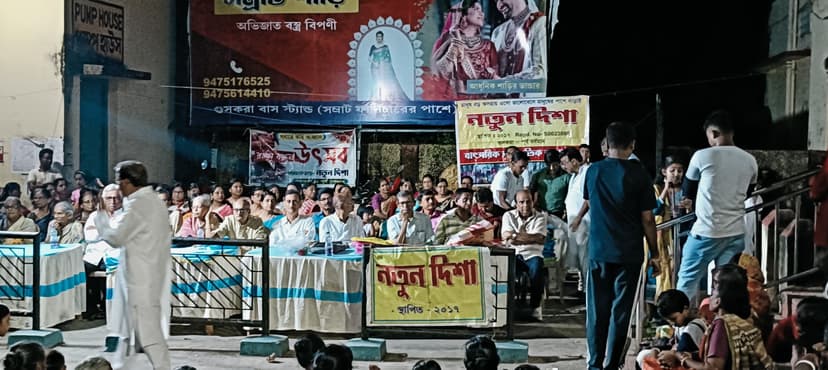
This New Disha (New Direction) school has now completed four years. Our food distribution at the railway station has continued for ten years. Through many ups and downs, praise and criticism, we have stayed steady. Without being swayed, we have continued our work together.
Many people have stood with us silently, without seeking recognition. Some are locals, some from nearby villages, some from faraway cities, and even from abroad. From the depths of their hearts, they love these children and the underprivileged. Together, we all want to do something meaningful for the students and the needy. For that, we are immensely grateful.
Through this work, we have gained many experiences. We have seen the extreme poverty of people. We have witnessed how the joy of the utterly destitute shines through when they receive even a small piece of meat. The little ones, when they see rasgullas or meat, their eyes sparkle as though they have received the moon.
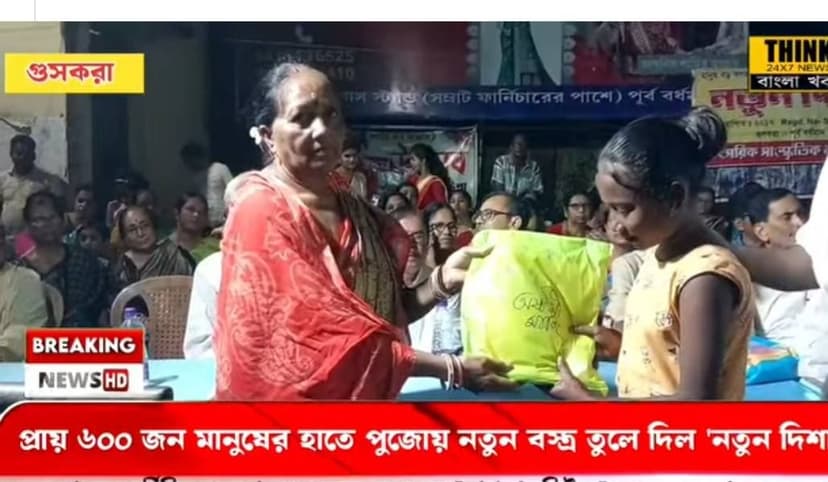
When we give them old clothes, their happiness knows no bounds. And once a year, when we give them new clothes at low cost, their joy overflows. On winter nights, the elderly wait eagerly for blankets, so they can sleep wrapped in warmth on platforms or in huts.
The lives of children who come to eat at the railway station or study in the school resemble countless untold novels. Some parents try their best to raise their children well. But for many others, life is only pain and deprivation that never seems to end.
-
Some children are abandoned by their mothers, who leave for another man.
-
Some lose their mothers young, while fathers remarry. These children still dream of learning, drawing, or dancing.
-
Some lose their fathers, and their mothers work in several homes to survive, with the child also working as a servant.
-
Some are left behind to live under the mercy of neighbors when parents die or abandon them.
-
Some fathers force their children into labor while wasting the children’s earnings on alcohol.
-
Some children live with their grandmothers after both parents abandon them.
-
Others suffer from health issues like low hemoglobin and kidney disease while their fathers work as daily laborers earning only a meager wage.
Even the tribal and marginalized children, who sometimes skip classes to work in fields harvesting potatoes, still come to study. Their resilience is a lesson in itself.
A Hope for Education
The words of poet Sunil Gangopadhyay echo in our minds:
"Oh, we do not ask for stale bread, nor for fancy meals.
Dress us in grey shorts and white shirts.
Pinch our cheeks and tell us lovingly,
‘Be careful! You too will go to school.’"
"ওগো আমরা বাসি রুটি চাই না,পাঁচ নয়া চাই না
আমাদের ছাই রংয়ের হাফ প্যান্ট আর সাদা শার্ট পড়িয়ে দাও।
আমাদের গাল টিপে দিয়ে বলো! সাবধানে
আমরাও স্কুলে যাবো।"
With that hope, we continue. That’s all for today. Wishing well-being for everyone.